



IMA
2026 IMA World Congress (in Brussels) – Call for papers
CONFERENCE
Living Conditions
10 DEC 2025

The Xth IMA WORLD CONGRESS will take place in BRUSSELS on JULY 1–3, 2026, hosted by CAPE at UCLouvain Saint-Louis Brussels.

We are pleased to invite you to contribute to the Xth IMA WORLD CONGRESS which will take place in BRUSSELS on JULY 1–3, 2026, hosted by CAPE at UCLouvain Saint-Louis Brussels.

This global event promises insight, innovation, and connection for all things microsimulation. We welcome contributions on topics such as:

·  Applications of microsimulation modelling (tax and transfer systems, dynamic models, spatial, transport, health, environmental, firm-level, farm models, etc)

·  Research methods related to microsimulation (labour supply models, inequality analysis, agent-based modelling, etc)

·  Methodological contributions (synthetic data, data fusion, forecasting methods, machine learning for microsimulation, etc)

Notifications of acceptance will be sent around mid-February.
For complete information about the event, visit our website

news-call_to_action-bg-color

Submit your abstract by January 31, 2026

CONFERENCE
CONFERENCE
Round table

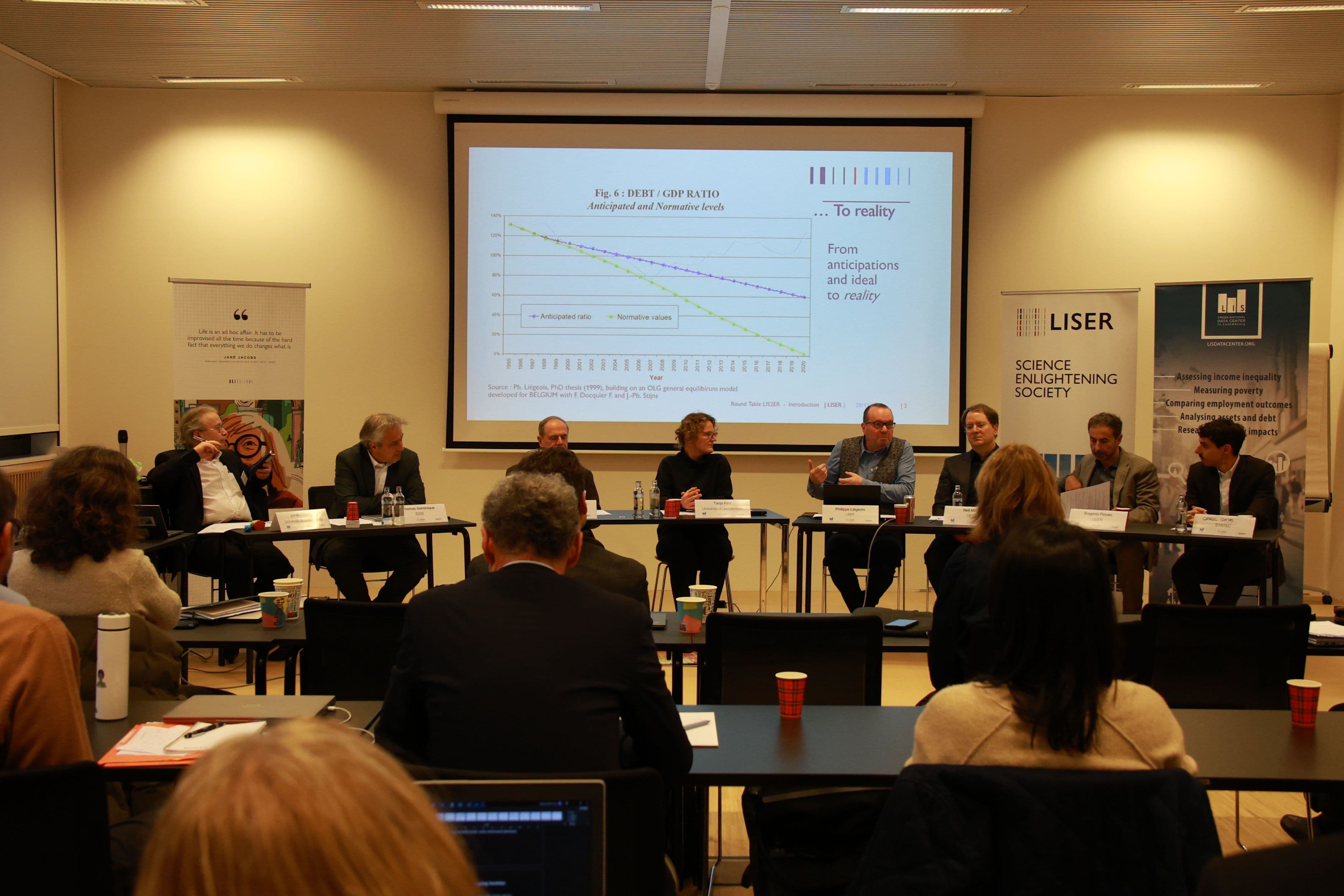
On November 27-28, the LIS Cross-National Data Center and LISER co-hosted the 2025 (LIS)²ER–SHARE Luxembourg Joint Workshop on “Pensions and Old-age Well-being: Policy Challenges in Ageing Societies”. The two-day workshop, supported by the (LIS)²ER Initiative and the SHARE Country Team, brought together interdisciplinary researchers and policy experts to examine socio-economic issues and policy challenges faced by ageing societies in Europe. The workshop featured five thematic sessions with ten academic presentations, followed by a policy roundtable on pension reforms.

Health, family and well-being
CONFERENCE
Industrial

In recent years, there has been a discernible shift in the discourse on industrial relations in Europe. Contentious collective bargaining in response to surging inflation, tighter labour markets leading to a stronger bargaining position for workers, renewed strike activity in many countries and organising drives in the low-wage service sector have been noticeable developments. These changes contrast with the preceding decades marked by the erosion of sectoral collective bargaining and associated institutions.