



Round table
2025 (LIS)²ER–SHARE Luxembourg Joint Workshop on “Pensions and Old-age Well-being: Policy Challenges in Ageing Societies”.
CONFERENCE
Living Conditions
27 NOV 2025

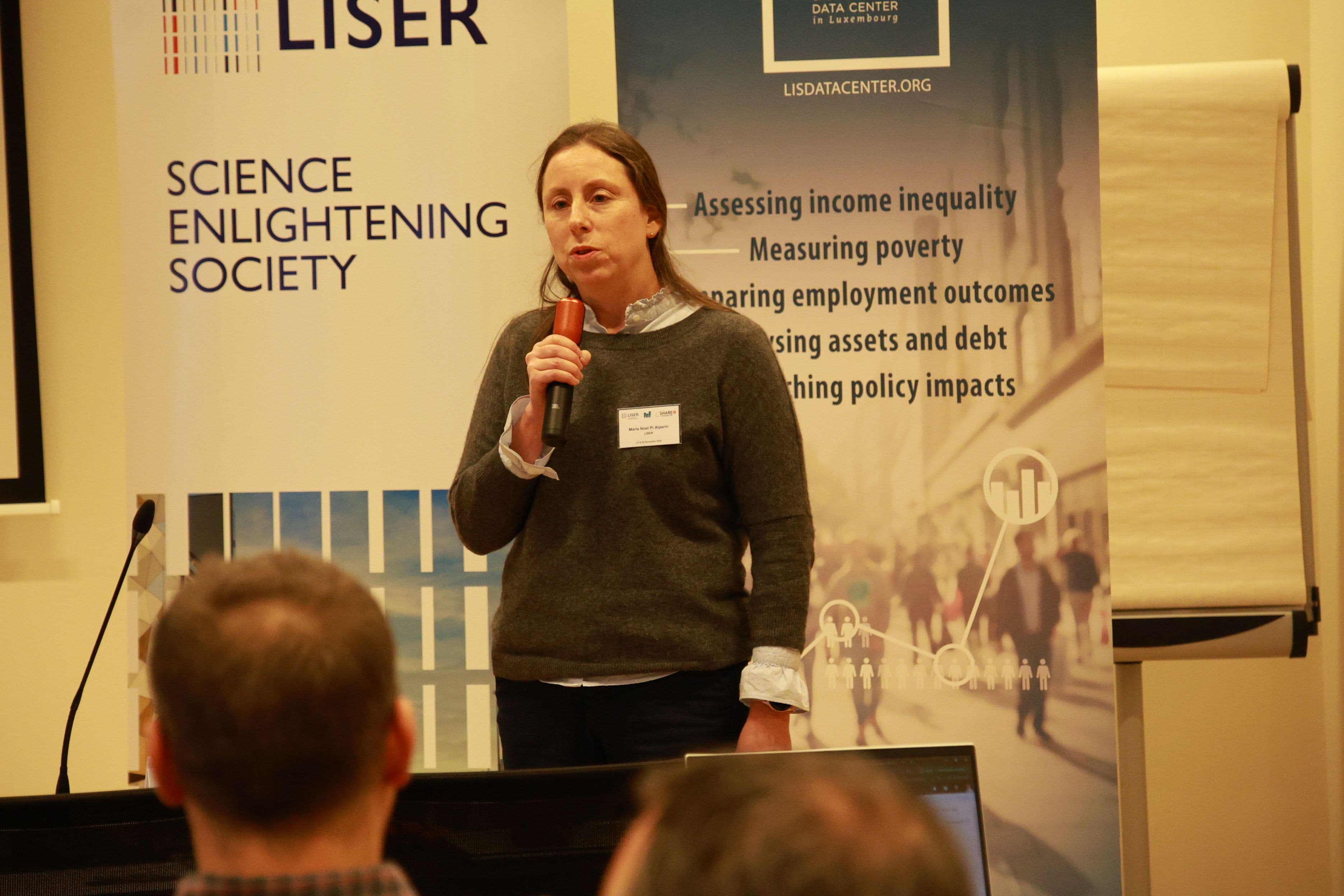
On November 27-28, the LIS Cross-National Data Center and LISER co-hosted the 2025 (LIS)²ER–SHARE Luxembourg Joint Workshop on “Pensions and Old-age Well-being: Policy Challenges in Ageing Societies”. The two-day workshop, supported by the (LIS)²ER Initiative and the SHARE Country Team, brought together interdisciplinary researchers and policy experts to examine socio-economic issues and policy challenges faced by ageing societies in Europe. The workshop featured five thematic sessions with ten academic presentations, followed by a policy roundtable on pension reforms.

The workshop opened with a session themed on the perspectives on elderly care. Jérôme Schoenmaeckers (HEC-Liège) discussed the double burden of low-income persons facing a higher risk of old-age dependency, while Yarine Fawaz (Universidad Autónoma de Madrid) shed light on how informal caregivers, without proper institutional support, bear adverse social consequences over a long term.

In Session 2 on health and well-being, Terhi Ravaska (Tampere University) presented evidence on how reduced working hours improved health outcomes among older workers based on part-time pensions in Finland. Mathieu Lefebvre (University of Strasbourg) also showed how worsening health conditions reshape the patterns of consumption and well-being in later life.
2678

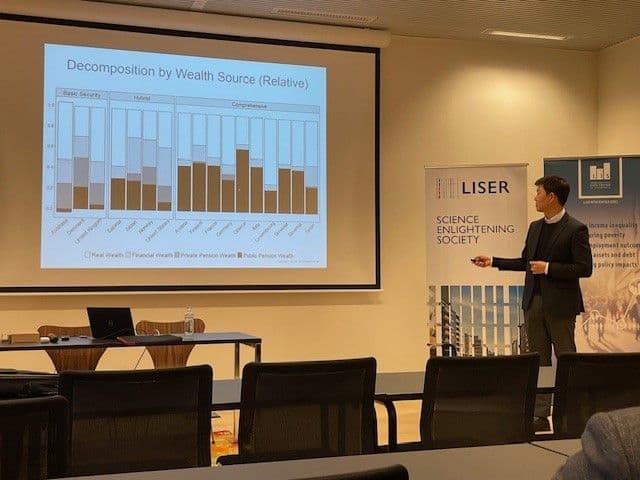
In Session 3 on retirement wealth, Noelia Bernal Labato (Universidad del Pacífico) presented strategies to encourage low-status workers’ participation in retirement saving plans, based on a randomized policy experiment in Peru. Kun Lee (LIS & LISER) offered a macro-comparative view on how the public-private mix in pension systems shapes wealth inequality in later life.

In Session 4, two presentations by Marike Knoef (Tilburg University) and Pilar Garcia-Gomez (Erasmus University Rotterdam) highlighted the intergenerational consequences of grandparents’ delayed retirement and parental job loss on children’s educational and health outcomes,using high-quality administrative data from the Netherlands.

Kun
Vincenzo Galasso
Vincenzo Galasso (Bocconi University)

In Session 5 on retirement policies, Vincenzo Galasso (Bocconi University) examined how policy uncertainty influences retirement preferences, increasing in early-retirement decisions. Arthur Seibold (LMU Munich) demonstrated the spillover effects of raising retirement ages, augmenting behavioural responses through close social networks.

Arthur

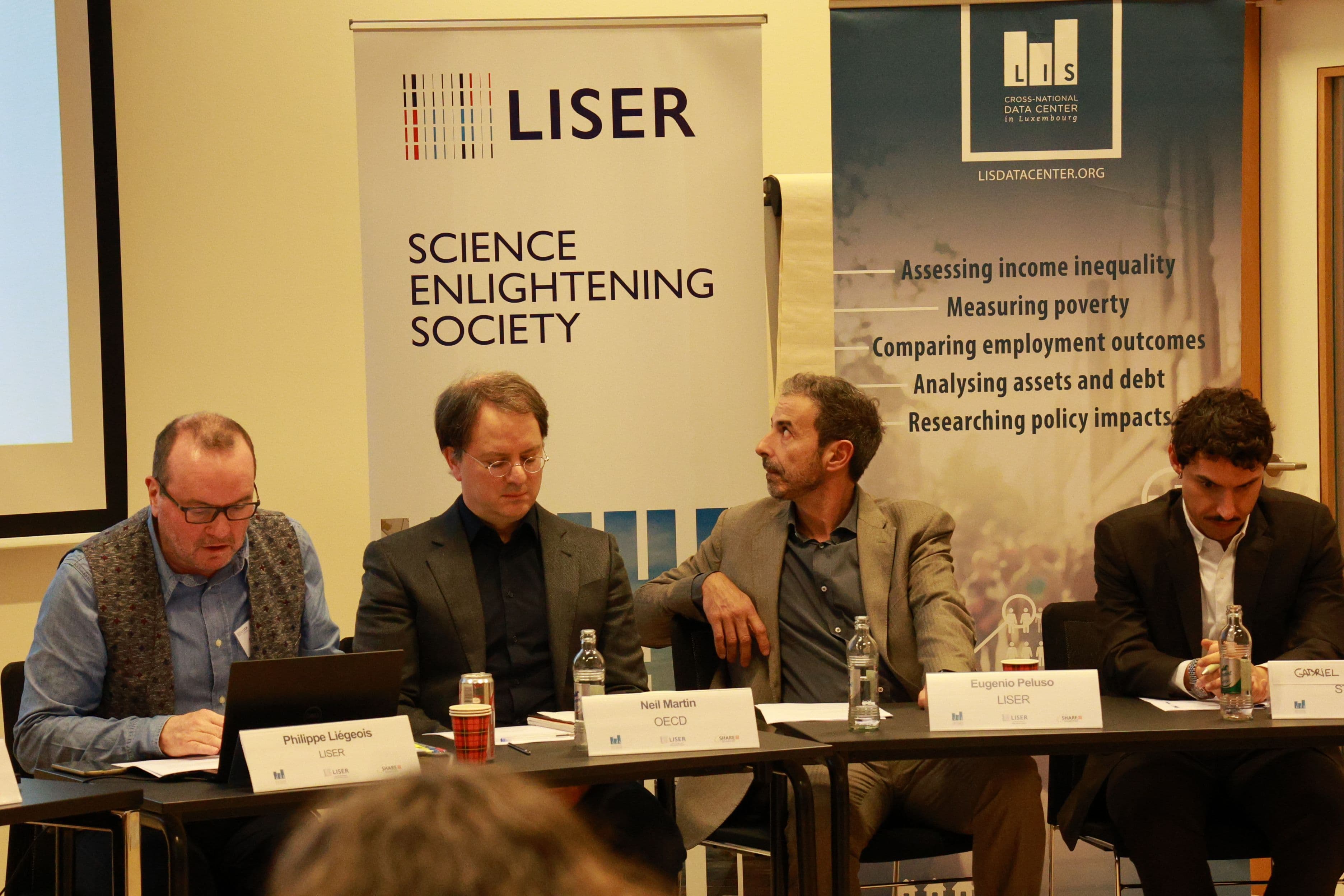
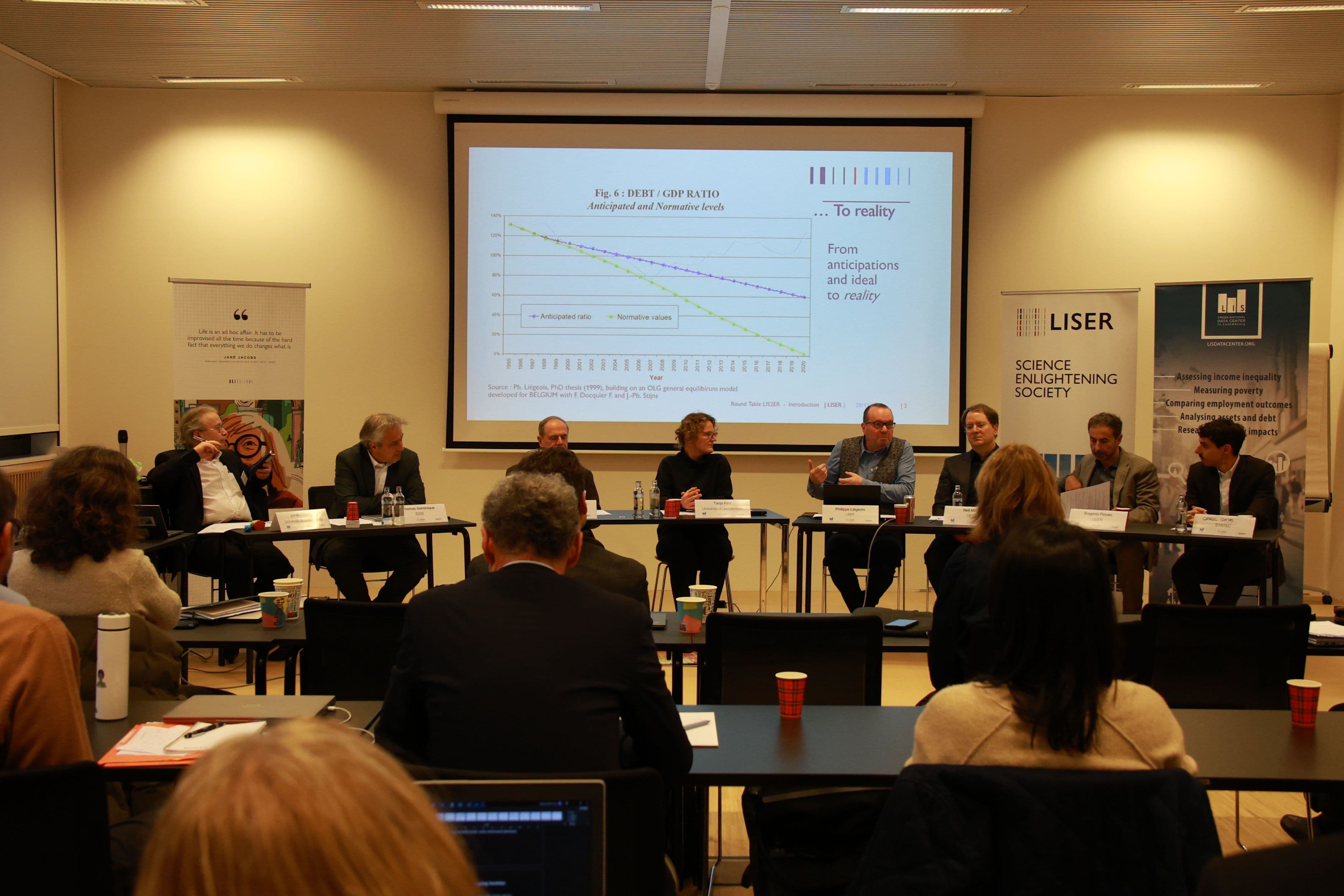
The workshop concluded with a policy roundtable, “Shaping the Future: The Acceptability of Pension Reforms”, bringing together Louis Chauvel (University of Luxembourg), Thomas Dominique (IGSS), Bernhard Ebbinghaus (University of Mannheim), Tanja Kirn (University of Liechtenstein), Neil Martin (OECD), Eugenio Peluso (LISER) and Gabriel Gomes (STATEC), moderated by Philippe Liégeois (LISER). The seven panelists discussed some pressing issues and challenges surrounding pension reforms across Europe, such as uncertainties and complexities in making long-term fiscal projections and intergenerational justice in the context of demographic transition, polycrisis, and welfare state reforms. The speakers also emphasized the importance of fairness, communications and the processing of information in shaping the public acceptability of pension reforms.


Overall, the workshop showcased the importance of interdisciplinary collaborations and effective communications between policymakers, academics and the public to translate scientific evidence into policy actions. We thank all presenters, discussants, panelists and participants for their contributions and engagement to these rich discussions on one of the most pressing policy challenges of our time.


Eugenio
CONFERENCE
Round table

On November 27-28, the LIS Cross-National Data Center and LISER co-hosted the 2025 (LIS)²ER–SHARE Luxembourg Joint Workshop on “Pensions and Old-age Well-being: Policy Challenges in Ageing Societies”. The two-day workshop, supported by the (LIS)²ER Initiative and the SHARE Country Team, brought together interdisciplinary researchers and policy experts to examine socio-economic issues and policy challenges faced by ageing societies in Europe. The workshop featured five thematic sessions with ten academic presentations, followed by a policy roundtable on pension reforms.

Health, family and well-being
CONFERENCE
Industrial

In recent years, there has been a discernible shift in the discourse on industrial relations in Europe. Contentious collective bargaining in response to surging inflation, tighter labour markets leading to a stronger bargaining position for workers, renewed strike activity in many countries and organising drives in the low-wage service sector have been noticeable developments. These changes contrast with the preceding decades marked by the erosion of sectoral collective bargaining and associated institutions.

CONFERENCE
LISER policy lab launch

LISER took an important step forward in its mission to deliver research with tangible impact by officially launching the LISER Policy Lab. The event gathered policymakers, researchers, and stakeholders to explore how robust data and scientific evidence can shape more effective and inclusive public policies in Luxembourg, Europe, and beyond.